For Employers
A Menopause Webinar Isn’t a Menopause Strategy
One lunch-and-learn feels like progress. Without an owner, trained managers and a way to measure it, it changes almost nothing. Here’s what separates awareness from strategy.
By Tyre Richards, BSHA, MBA · Published
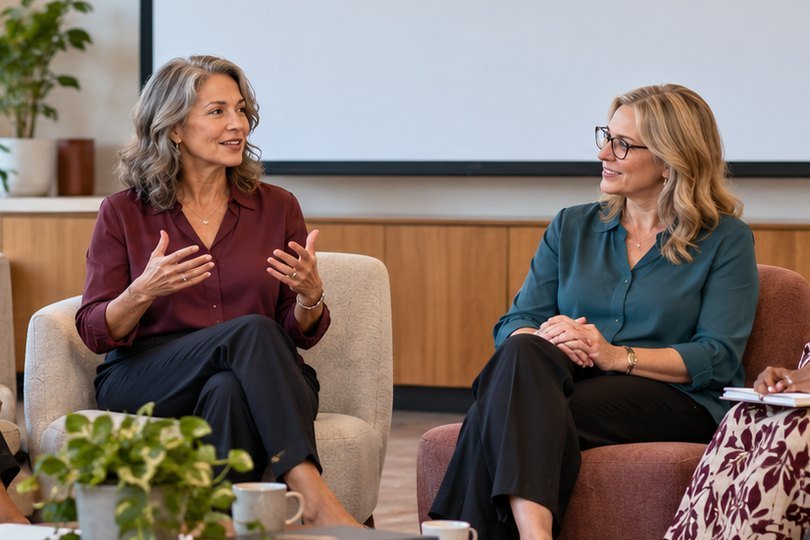
A lot of companies have now run a menopause webinar. Someone in HR or the women’s ERG books a speaker, 60 people join at lunch, the feedback is warm and the box gets checked.
I’m glad those sessions happen. Awareness matters. But I’d ask any executive team a direct question: what changed the following Monday?
For most organizations, the honest answer is nothing.
The gap a webinar doesn’t close
Bank of America’s 2023 survey of 2,000 women and 500 benefits managers shows how far apart employers and employees are:
- 71% of employers said their company culture around menopause was positive. 32% of women agreed.
- 76% of benefits managers said menopause had come up in conversations with HR. 3% of women said they’d raised it.
- 64% of women wanted menopause-specific benefits. Only 14% believed their employer recognized the need.
A single session doesn’t move those numbers. The problem isn’t that women lack information. It’s that the organization has no system to act on what they need.
Awareness vs. strategy
Awareness is an event. It informs people, signals good intent and ends at 1 p.m.
Strategy has an owner, a budget, a metric and a review date. It changes how managers respond, what people can ask for and what the benefits plan covers. It’s measured the way you’d measure any other retention risk.
The difference shows up in one place more than any other: the manager. After a webinar, support still depends on which manager a woman happens to report to. One handles it well. The next one jokes about hot flashes. That inconsistency is where you lose people, and it’s a risk you’re carrying whether or not you’ve named it.
Where most companies sit
When we assess organizations, we look at leadership, culture, managers, the physical workplace, benefits, and policy and measurement. Most companies that have run a webinar sit at what we call the Reactive stage: good intent, handled case by case, usually after a problem.
That’s normal. It’s also not a strategy. Getting from Reactive to Supportive takes an owner, trained managers and a few numbers reviewed by leadership. It doesn’t take a two-year program. Most organizations can move a full stage in 90 days. Our free employer’s guide includes a short self-assessment if you want to see where you stand.
Keep the webinar. Build what comes after it.
The webinar is a good opening. The question is whether it’s an opening to something.
So here’s the test I’d put to your leadership team: if a woman on your team raised menopause with her manager tomorrow, would you know what happens next, and would you trust it to go well?
If the honest answer is “it depends on the manager,” you have awareness. You don’t have a strategy yet.
Build a Menopause-Ready Workplace
If you want to know what this is costing your organization, let’s look at your numbers together. In 30 minutes we’ll talk through your workforce, where you’re exposed and what your first 90 days could look like. Schedule a 30-minute call →
Already know what you need? Skip the call and book it →
Sources
- Bank of America with the National Menopause Foundation, Break Through the Stigma: Menopause in the Workplace (2023).
This article provides general information. It is not legal, HR, benefits, or medical advice.