Healthy Aging
Balance Is Not Something You Have or Lose: It Is a Skill You Can Train
Strength gets the spotlight in midlife. Balance is its quieter partner, and it responds to practice. Start with one foot and a sturdy counter.
By Tyre Richards, BSHA, MBA · Published
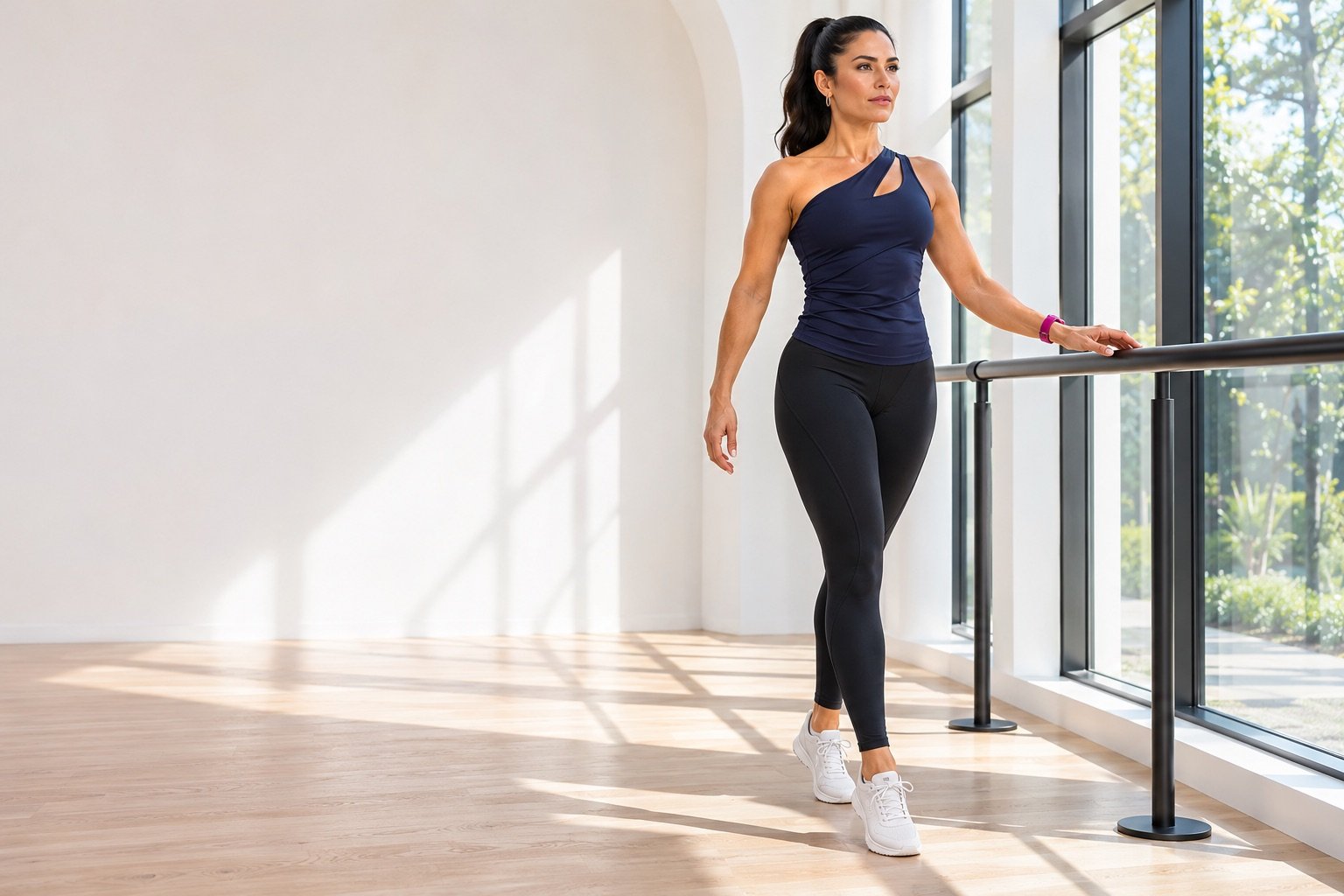
Before you read further, stand beside a sturdy counter, lift one foot an inch or two off the floor, and count how long you can hold it. Keep a hand near the counter. There is nothing to score; you are only noticing.
Strength gets the spotlight in midlife, and rightly so. Balance is its quieter partner: the ability to control your body when the ground, your attention, or your position changes.
The Centers for Disease Control and Prevention includes balance work alongside aerobic and muscle-strengthening activity for adults 65 and older. But there is no reason to wait for a birthday to practice the skill. Balance depends on several systems working together—vision, sensation, the inner ear, muscle strength, reaction time, and confidence. Practice challenges that coordination.
A two-minute beginning
Stand beside a sturdy counter, close enough to touch it if needed. Keep the floor clear and wear stable shoes.
- Stand with your feet together for 20–30 seconds.
- Place one foot slightly ahead of the other and hold for 20–30 seconds.
- Switch which foot is forward.
- If that feels controlled, walk heel-to-toe for five slow steps along the counter.
Your goal is not to prove that you can wobble through the hardest version. It is to find a position that requires attention while still feeling safe. Progress can mean less hand support, a narrower stance, or a few more controlled seconds—not closing your eyes or standing on an unstable surface without professional guidance.
Attach the practice to something already in your day: while the kettle heats, after brushing your teeth, or before a strength session. Frequency matters more than turning it into a performance.
If you have fallen, feel dizzy, notice a sudden change in balance, use an assistive device, or have a condition that affects movement or sensation, ask a clinician or physical therapist what is safe for you.
“…he set my feet on a rock and gave me a firm place to stand.”
Psalm 40:2 (NIV)
Sources
- Centers for Disease Control and Prevention: Physical activity guidance for older adults.
- Centers for Disease Control and Prevention: Older adult fall prevention resources.
This article is for education and is not medical advice. If you have fallen, feel dizzy, or have a condition that affects movement or sensation, ask a clinician or physical therapist what is safe for you.
Scripture quotations taken from the Holy Bible, New International Version®, NIV®. Copyright © 1973, 1978, 1984, 2011 by Biblica, Inc.® Used by permission. All rights reserved worldwide.